The last few weeks of quarantine have had me thinking differently on a number of subjects—everything from the way I play games to the way I view myself as a part of the workforce has shifted. There shouldn’t be anything revelatory about the fact that people’s perspectives change in times of crises, but somehow it never occurred to me how a culture might change due to something like a pandemic; the stories we write and share five years from now will undoubtedly be different than those from five years ago.
This isn’t strictly new—I felt similarly about the 2016 election—and it’s very much been a focus of any period literature. Again, the effects of the lockdown, specifically, surprise me. Before the lockdown, I felt that I was coming to a place of understanding my own worth. I was working in a tea shop for minimum wage, but I would walk home from work and piece together ideas and stories in a way that I wished I could when I was unemployed. I felt inspired, creative, and like I was able to grow within a routine that respected my interests.
Then came news of COVID-19 spreading, the Santa Clara County Stay at Home orders, the downsizing of most local businesses and restaurants, and, perhaps unsurprisingly, a return to unemployment and a refogging of inspiration and personal growth. I still have moments of real creativity, I feel. Every project I’ve started in this time could make me jump with excitement in the right moment, but those moments are rare and the people who I would most like to share those joys with aren’t here. There’s a very real sense that the people I’m locked up with, however caring, don’t see value in what I do and don’t respect what I perceive to be positive growth because it’s not enough. And so my little projects—the characters that I name and come to care for, the moments and scenes that make up half-finished stories, and my forays into making my own interactive media—are prone to falling by the wayside.
The environment in which you work includes the people who you share your work with. If you want to work creatively—to be motivated and feel fulfilled by your creations—you have to be in the right environment. Those are lessons that I’ve learned time and time again.
I always make a point to note that I have an end goal for my profession. I want to write narrative and dialogue for games. Everything I do creatively is an attempt to push myself closer to that goal. I write stories that set up scenarios that I think would be fun to play through, I’m constantly expanding my toolset with software like Twine and Unity, and I try to insert myself in projects that will put me in a writing position. Most recently, I’ve started work on a game project that I’m hoping to document here.
The trouble is there’s no such thing as surety. How often does something really come up that fits my interests? Would they be looking at someone who’s never worked in AAA? How do you break into an industry that (outwardly) only seems to value experience within itself? Piecewise, I suppose. Having something to show. Sometimes hoping that your writing samples will make it to human eyes. Ideally, you know a guy who knows a guy…
I’m turning back now to freelance writing on gaming news & SEO, because it’s a field I’ve found some success with in the past, it’s adjacent to the work that most interests me, and, frankly, it will keep me sane better than sitting in my room feigning the tenacity to learn to speedrun DOOM Eternal.
Freelance writing is, at times, the art of giving your voice to those who could use it while obscuring the fact that it is your voice. You don’t write top ten lists in first person unless you have your own audience. And having your own audience makes you an influencer, not a contributor. You’re a different type of asset. A different tool in someone else’s toolbox. Markets don’t really care for individuals, and when you’re selling SEO and soundbites, they don’t much care for heart, either. Just timeliness and clickthrough rates.
That isn’t to say I haven’t had some great experiences writing articles for different websites. The regularity of a publishing schedule is a massive boon. It feels great to be productive—to put out an article on a subject you’re passionate about or proud of, or to beat a personal quota. A great editorial team can also help make up a positive environment.
More than anything I want to recapture that sense of growth that I had before the lockdown. I want to believe that I’m moving forward so that I can push myself further—so I can find the energy to finish what I start.
The project that demands my attention the most at this moment is a Unity game I’m working on. So far, it’s a solo project, and I’m not entirely sure whether it will move past the proof of concept phase. I keep coming back to it for two reasons. First, it has an interesting conversation system that I think bears promise for a narrative game. It would be a great learning experience to work in, and I believe it would show off my strengths as a writer if I could make it work. Second, it reminds me immediately of a certain style of game—not in terms of its genre, but in the way that I would approach it as a player.
This comes back to the quarantine, in a way.
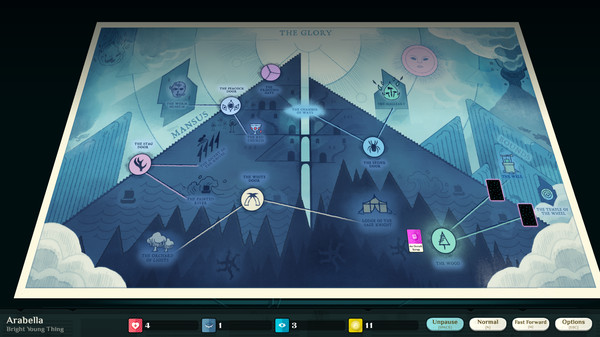
The games that have always stuck with me the most do so for two reasons: they subvert design expectations and they require active participation from the player. I’ve found myself returning to Cultist Simulator pretty often to uncover new mysteries and interactions between cards, and it’s certainly a major inspiration for my project. Hollow Knight caught my eye as well, because both its environment and its bosses seem to echo a sort of wonder and puzzle element; you have to be paying attention to find secrets in the environment, and you have to step up and play the game on its terms if you want to stand a chance against The Radiance or Nightmare King Grimm. I don’t tend to play these kinds of games long after I beat them, though. These are some of my favorite games, but they aren’t my most played games—especially in times like this. Those fall into a different category.
A part of me is starting to hate roguelikes, or really anything with infinite or procedurally generated content. It’s nothing to do with the quality of those games—I adore Darkest Dungeon, I thought Slay the Spire was cleverly designed and interesting, and I’ve put plenty of time into games like Hearthstone, Risk of Rain 2, and Warframe. The problem is that they’re easy to play passively. They’re generally not that social, and once you figure out the strategies that interest you, the gameplay loop just becomes repetitive. They’re time vampires. Or more aptly, they’re like sad songs that you listen to when you’re in a bad mood. Once you stop actively engaging with the content they provide, they seem to pull you into a depressive loop. Social games aren’t entirely immune to this, either.
I’ve also sunk more hours into certain competitive multiplayer games than I care to admit, but there’s this funny quality that I’ve noticed they all have in common: The more I focus on perfecting my gameplay in something like Dota, or League of Legends, or Starcraft, the less the game becomes about itself. Instead, content can be separated into two halves. Every piece of art, every spoken word, and every sound in one of these games is either a tool for communicating a mechanic or it is background noise. The game that players engage in is an abstraction of game mechanics—not the fulfillment of the fantasy on-screen.
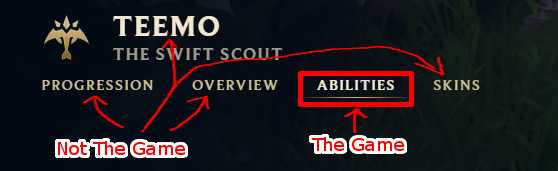
All of this is to say that a game’s design can influence the way a player thinks, and I believe that designs that require players to be actors are in some way conducive to healthy thinking.
I’m reticent to call games that demand that players think engaging because I believe that term has lost all meaning. I might log into Warframe regularly to complete daily and weekly tasks, and that would constitute engagement from a marketing perspective, even if the game failed to ever make me think critically or actually enjoy myself.
Meanwhile, I might play DOOM Eternal for 30 minutes, and the nature of its push-forward combat and puzzle encounters means that I have to be on my toes before and during an engagement to have a chance to progress. The game makes you think. Otherwise, you fail. That, to me, represents something far more interesting.
And that’s what I want to see in my own project.
So I’ve rambled a bit to this point. I’m scatterbrained, as I think a lot of people are right now. But I’m back to using my website, and I hope posting some updates here will help me hold myself accountable with my creative work.
I’ll be posting tidbits of my writing whenever it seems appropriate, but I’m hoping to have the first post on my game project sometime next week. I’ve already addressed why it’s important to me, so it seems appropriate that I should go into detail on how I’m managing it.
For the time being, I’m calling the project Osseux.
 Matthew Miller Stories
Leave a comment